1. Overcooked! 2
We keep coming back to Overcooked! 2 when a group wants instant chaos with very little explaining. The kitchens are colourful, the jobs are easy to understand, and the pressure rises quickly once orders start piling up. It is one of those local multiplayer games where even a quiet player soon finds themselves calling out instructions.
The fun comes from coordination rather than complicated controls. We might divide the chopping, cooking and washing between us, only to discover that the plan falls apart when a platform moves or a fire starts. That shared scramble creates plenty of laughs without needing everyone to be equally skilled.
It works particularly well for mixed groups because failure is part of the entertainment. We can restart, adjust the plan and try again, usually with a little more confidence and a lot more shouting. Keep the session casual, and the kitchen disasters become stories people remember after the console is switched off.
2. Mario Kart 8 Deluxe
Mario Kart 8 Deluxe is a reliable choice when we want racing that welcomes newcomers but still gives experienced players plenty to argue about. The tracks are bright and varied, while items can change the result in seconds. A short race also makes it easy for people to join between rounds.
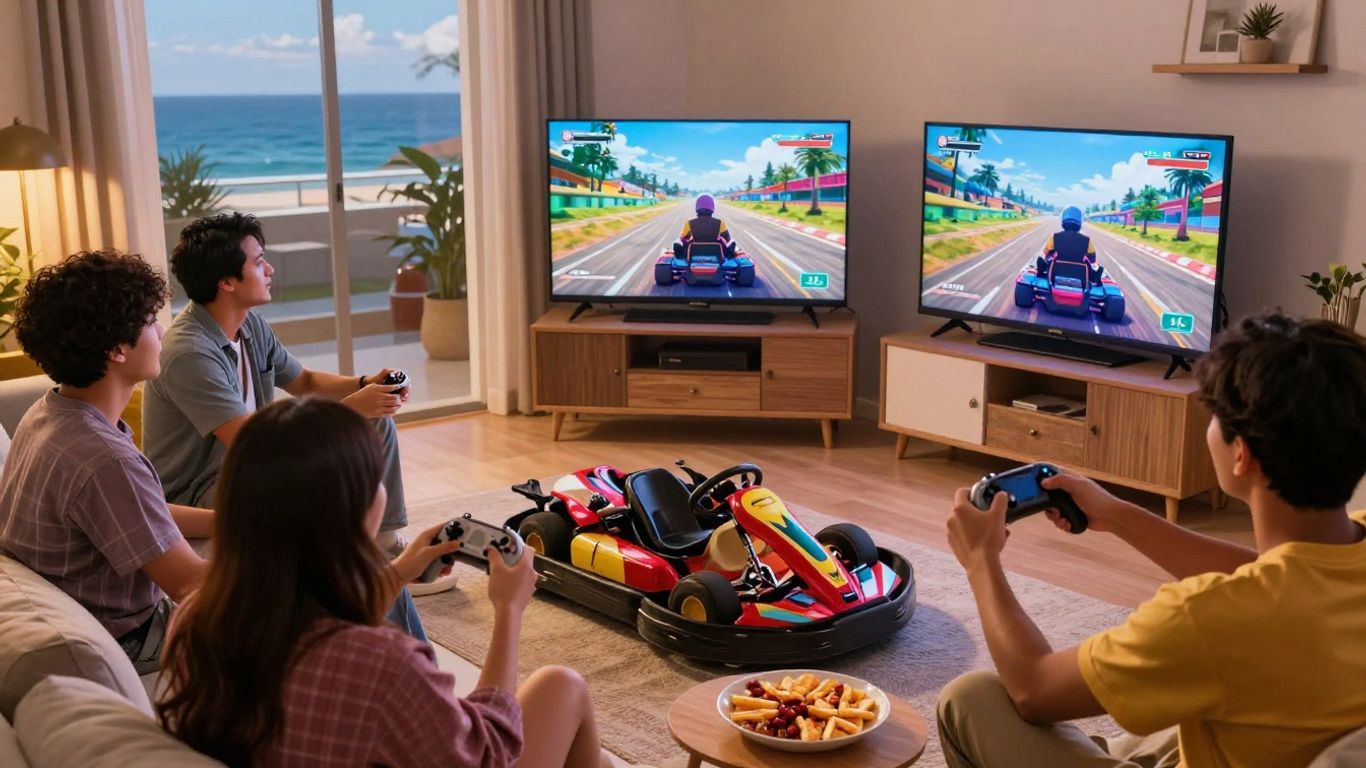
For a game night, the best approach is usually to agree on a few simple house rules before starting. We can rotate the controller, mix up the cup selection and avoid turning every race into a serious championship. That keeps the mood friendly while preserving the thrill of a last-corner overtake.
Its strength is the quick reset. A disappointing finish does not linger for long because another race is only moments away, and each track creates a different kind of challenge. We get a good balance of luck, line choice and timing, which makes it easy to enjoy whether we are playing with family or close friends.
3. Super Smash Bros. Ultimate
Super Smash Bros. Ultimate gives a group a lively arena where familiar characters, unpredictable hazards and quick matches keep the room engaged. We can play a few rounds without committing to a long session, which suits gatherings where people are coming and going. The basic controls are approachable even when the deeper techniques are not.
The game rewards us for learning the rhythm of a character rather than memorising a huge rulebook. New players can focus on moving and attacking, while regulars can practise spacing, recovery and timing. That difference in experience often makes the matches more entertaining, especially when a simple move turns the whole battle around.
We recommend changing the rules occasionally instead of repeating the same setup all night. Different stages and match formats can make the game feel fresh, and a gentle rotation gives everyone a chance to find a character they enjoy. The result is competitive without requiring the room to take every defeat personally.
4. It Takes Two
It Takes Two is built for two players who want a cooperative adventure rather than a series of disconnected mini-games. We move through imaginative environments where each person has a role, and progress depends on paying attention to what the other player can do. It creates a stronger sense of partnership than games where one person can quietly carry the whole team.
The changing mechanics keep the journey from feeling repetitive. One moment we might be solving a small environmental problem, and the next we are learning a completely different way to interact with the world. We enjoy that variety because it gives both players regular opportunities to lead.
This is best suited to a pair willing to communicate and stay patient. Some sections ask us to coordinate our timing, so rushing ahead can make a simple task surprisingly awkward. Once we start treating each obstacle as a shared puzzle, the game becomes a warm, memorable centrepiece for a quieter night in.
5. LEGO Star Wars: The Skywalker Saga
LEGO Star Wars: The Skywalker Saga turns a familiar film universe into a playful cooperative adventure. We can explore, fight, solve light puzzles and collect objects together, with the humour helping keep the tone relaxed. It is an easy recommendation when a group wants something accessible but still substantial.
The appeal is not only in reaching the next objective. We can wander through colourful locations, experiment with different characters and revisit areas when we notice something we missed. That gentle freedom gives the session a comfortable pace, especially when younger and older players are sharing the couch.
Because the action is forgiving, we do not need identical skill levels for everyone to contribute. One player can focus on the main path while another investigates the surroundings or handles a nearby puzzle. It is a friendly option for families and mixed groups that prefer cooperation over intense competition.
6. Rocket League
Rocket League takes the basic idea of football and places it inside fast-moving car matches. We drive, jump and try to send the ball towards the opposing goal, but the simple premise hides a demanding amount of timing. That makes each local match easy to start and surprisingly satisfying to improve at.
The early games can look wonderfully messy. We may miss an open shot, collide with a teammate or accidentally send the ball in the wrong direction, yet those mistakes are usually funny rather than frustrating. With practice, we begin to understand positioning and learn when it is wiser to defend than chase every touch.
Small teams work well for a living-room session because everyone stays involved. We can swap sides after a few matches and let stronger players try a supportive role instead of dominating the ball. That approach keeps the game welcoming while still giving us plenty of room to celebrate a well-timed save or finish.
7. Gang Beasts
Gang Beasts is built around wobbling characters, awkward physics and situations that rarely unfold as planned. We can grab, shove and scramble across compact arenas while trying to stay upright. The controls take a little getting used to, but the clumsy movement is part of the joke.
The game shines when we stop worrying about playing perfectly. A carefully planned attack can collapse because our character stumbles, and a player who looked finished can suddenly cling to the edge and climb back into the action. Those reversals make the room react together, even when the match itself lasts only a short time.
We find it works best in bursts, with quick rounds and regular swaps. That prevents the physics from becoming tiring and gives everyone a chance to take part. It is a strong pick for groups that value laughter and spectacle more than precise competition.
8. Ultimate Chicken Horse
Ultimate Chicken Horse asks us to build a platforming course together, then attempt to survive the trap-filled result. Each round mixes creativity with mischief, because the best design is not simply the hardest one. We have to make a route that we can complete while placing obstacles that make everyone else struggle.
The building phase gives the group several useful ways to shape the evening:
- We can place hazards that test timing and patience.
- We can create safer routes that reward careful movement.
- We can adjust the course when a section feels unfair.
- We can favour clever shortcuts over pure difficulty.
That shared construction is what gives every round a personal touch. We remember who placed the awkward spring, who found the sneaky route and who accidentally made the finish impossible. Because the course changes between attempts, the game keeps producing new reasons to laugh rather than relying on the same match pattern.
It also suits groups with different gaming backgrounds. Creative players can contribute during the building phase, while platforming fans can focus on execution. We get a nice balance between making decisions together and watching those decisions cause trouble.
9. Moving Out 2
Moving Out 2 turns household removal into a cooperative timing challenge. We carry furniture, work around obstacles and try to get everything out efficiently, but the physical comedy means a sensible plan can quickly become a tangled mess. It has the familiar appeal of teamwork without taking itself too seriously.
We enjoy how clearly it encourages communication. One player might open a route while another handles a bulky item, and some objects are much easier to move when we stop pulling in opposite directions. The tasks become more manageable once we agree who is doing what instead of everyone grabbing the nearest thing.
The game is especially good for short, energetic sessions. We can attempt a level, compare how smoothly we worked and then try to improve the result. Even when we fail to move everything neatly, the chaos feels shared, which is exactly what we want from a relaxed couch session.
10. Minecraft Dungeons
Minecraft Dungeons offers a cooperative action adventure with familiar visual touches and a straightforward focus on exploring, fighting and collecting equipment. We move through varied locations, face groups of enemies and choose how our characters develop. It gives a game night more structure than a party title while remaining approachable.
The cooperative format lets us divide attention during busy encounters. We can focus on different enemies, revive one another and decide when to push forward or pause to regroup. That sense of shared momentum makes the adventure enjoyable for players who prefer working towards a common goal.
It is a good fit when we want one game to occupy a longer stretch of the evening. We can settle into a rhythm, experiment with equipment and gradually become more comfortable with the combat. The result feels like a proper journey, but it still leaves room for conversation between encounters.
Conclusion
The best local multiplayer games give us more than something to do with spare time: they create small stories, shared jokes and reasons to keep passing the controller. Whether we want frantic competition, careful cooperation or silly physics, this list gives us plenty of ways to shape a memorable game night around the people in the room.
Frequently Asked Questions
What makes a local multiplayer game good for a group?
A good choice is easy to explain, supports short turns or rounds, and gives players meaningful ways to participate. It should also remain enjoyable when people have different levels of experience.
How many people do we need for a couch gaming night?
Two players are enough for a focused cooperative adventure, while larger groups often suit racing, fighting and party-style games. The ideal number depends on how many controllers are available and whether everyone plays at once.
Should we choose cooperative or competitive games?
We can choose based on the mood of the group. Cooperative games encourage communication and shared progress, while competitive games create quick excitement and friendly rivalry.
How long should each game session last?
Short rounds are useful when people are sharing the controller or joining late. Longer sessions work well when the group wants to settle into a campaign or gradually improve at a particular game.
How can we include players who rarely play games?
Start with simple controls, forgiving rules and a game where mistakes are entertaining rather than punishing. We can also let new players watch one round before handing over the controller.
What should we prepare before the evening begins?
We should charge the controllers, check that the game is installed and make sure the television area is comfortable. Having a few backup choices ready also prevents a small technical delay from stopping the night.
How do we keep friendly competition enjoyable?
Rotate teams, change the rules occasionally and avoid letting one strong player control every round. A little self-awareness helps us celebrate good plays without making weaker players feel pushed out.